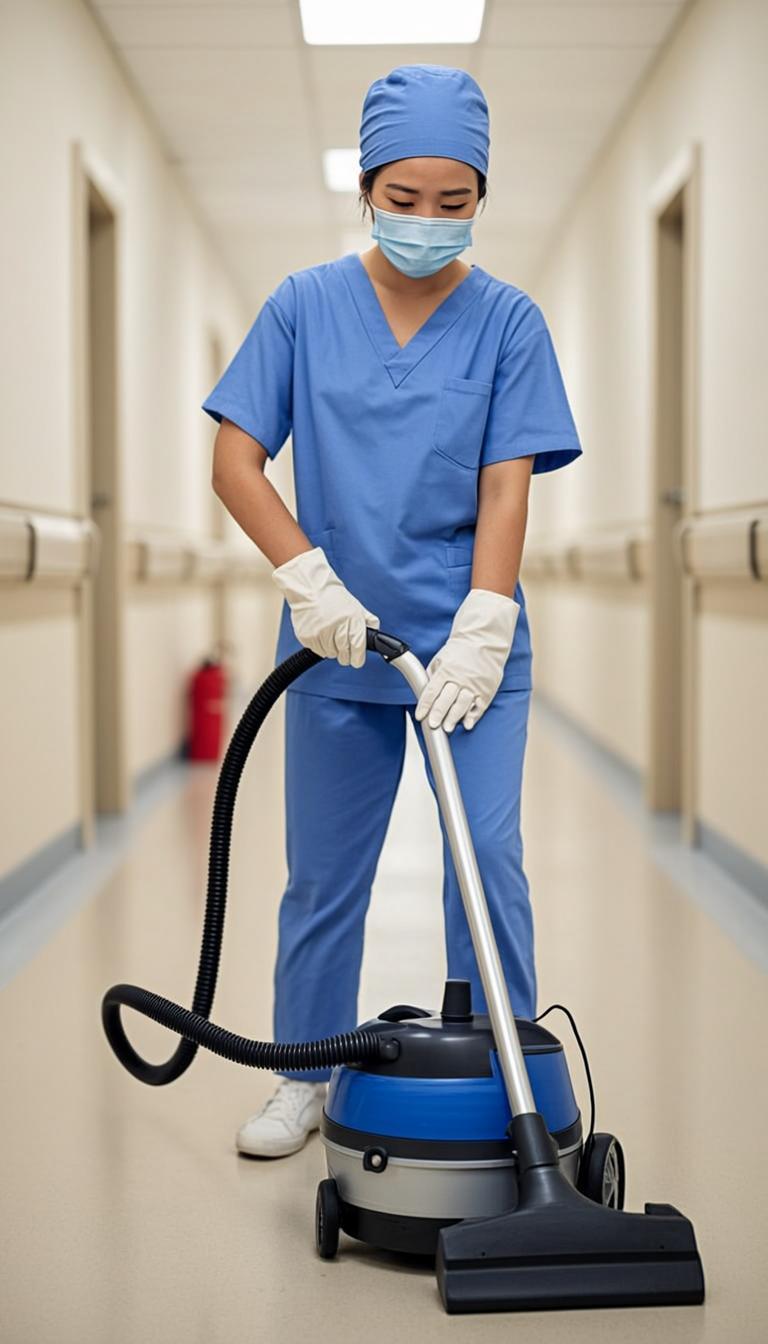
Cleaning inside healthcare environments must be consistent, traceable, and aligned with infection prevention requirements. In Zimbabwe, facilities that rely on informal or inconsistent cleaning processes place patients, staff, and their own reputation at unnecessary risk.
This checklist is designed to help clinic managers, hospital administrators, and healthcare procurement teams strengthen their cleaning programme around practical compliance fundamentals.
Start with risk-based cleaning zones
Not all healthcare areas carry the same contamination risk. Consulting rooms, waiting areas, washrooms, laboratories, treatment rooms, and high-touch patient care environments each require different cleaning frequencies and procedures.
A risk-based zoning approach makes schedules more realistic and more defensible during internal reviews or external inspections.
- Document daily, per-shift, and terminal cleaning requirements.
- Separate high-risk patient care zones from general public areas.
- Define response procedures for blood, spills, and contamination events.
Control chemicals, tools, and staff training
Compliance breaks down quickly when staff do not know which chemical to use, how to dilute it, or which cloths and mops belong in each zone. Cross-contamination often comes from poor tool separation and weak supervision rather than a lack of effort.
Every cleaner should be trained on chemical safety, PPE, colour coding, waste handling, and incident escalation. Supervisors should routinely check whether these procedures are actually being followed on the floor.
Make documentation part of the cleaning system
If a task is not recorded, it is difficult to prove that it happened correctly or at the right time. That matters for infection prevention, quality assurance, and regulatory readiness.
Use signed schedules, time-stamped checklists, incident logs, stock records, and quality inspection forms to create a clear audit trail.
Review quality and close the loop
A cleaning checklist only works when it leads to action. Managers should conduct periodic inspections, review recurring failures, and update schedules or training where weak spots continue to appear.
This turns compliance into a living operational system rather than a one-off paper exercise.
Frequently asked questions
What is the most common healthcare cleaning compliance gap?
In many facilities, the biggest gaps are inconsistent documentation, weak chemical control, and poor separation of tools across high-risk and low-risk areas.
Why is colour coding important in healthcare cleaning?
Colour coding helps prevent cross-contamination by making it clear which cloths, mops, and tools belong in specific zones or for specific tasks.
Need help applying this advice?
Talk to Vifara about your site, team, and cleaning standards
We help businesses across Harare and Zimbabwe build practical cleaning systems for offices, healthcare spaces, food-related environments, and other commercial facilities.